CLAY IN BALTIC CULTURE
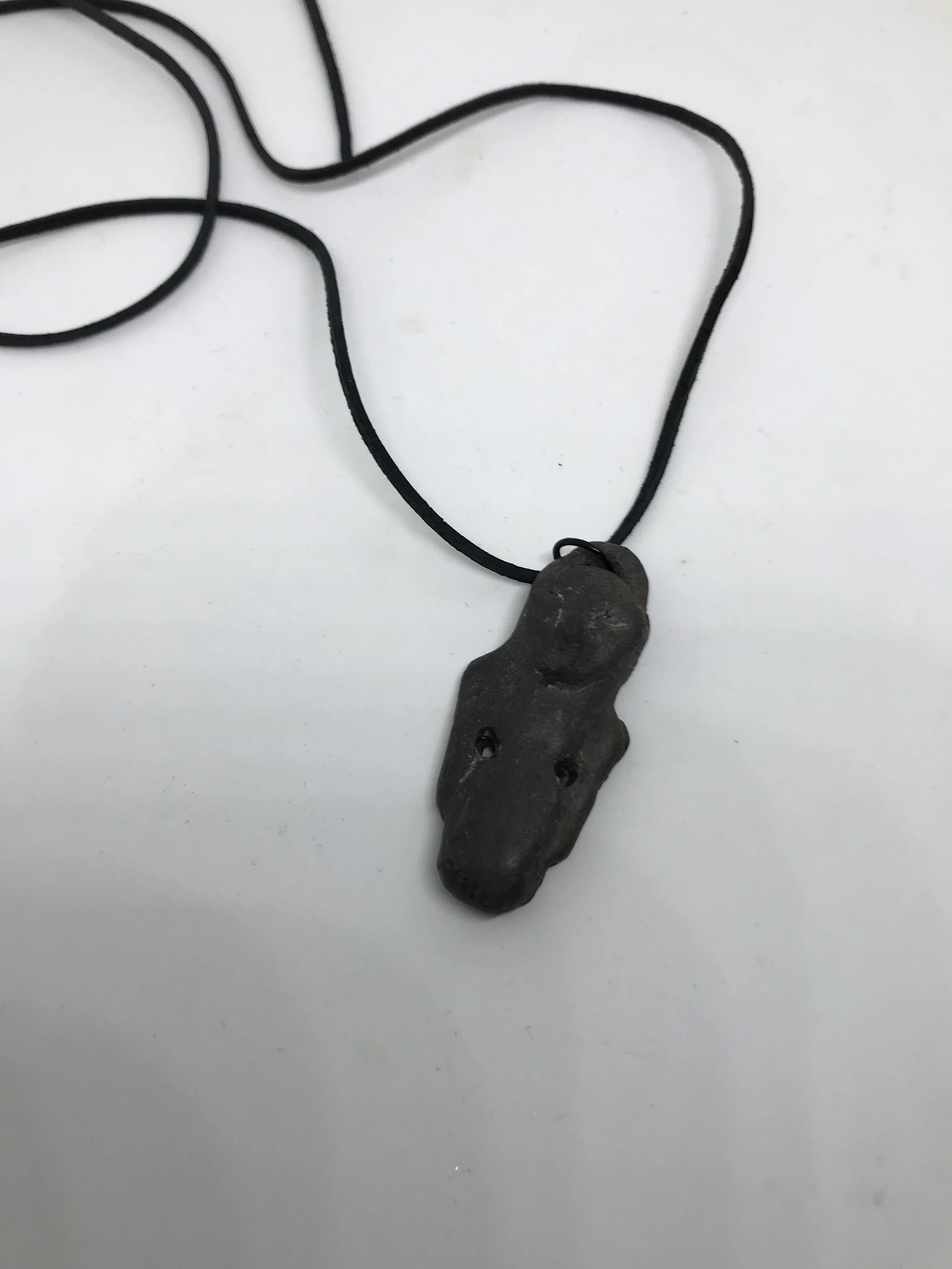
I made this Baltic archeological replica in 2018 using black clay, fired at cone 6
Clay (Molis/Mals) in Baltic (Lithuanian, Latvian) culture and heritage is far more than a raw material, as it is deeply connected to earth deities, cosmogonic myths, traditional rituals and daily life.
According to Baltic myths involving Dievas, the supreme sky god, and Velnias, the trickster/chthonic deity, the first human was formed directly out of clay or earth. Dievas shapes human figures from moist clay giving life or a soul through breath, while Velnias tries to imitate him often resulting in frogs, toads or other similar creatures.
Zemyna/Zemes mate (Mother Earth): the earth itself was considered as a living organism and a nurturing mother figure. Clay was seen as her literal flesh or womb. Taking clay from the ground was never a neutral economic act - it was sacred borrowing from the earth goddess.
The Sacred Oven (Krosnis): the clay oven was considered the heart and altar of the home. Fire and clay together held protective magic.
Black ceramics (juodoji keramika/melna keramika) - one of the oldest, most atmospheric living ceramic traditions in Europe. The defining metallic sheen - ranging from deep obsidian to silvery graphite - is not created with glazes, but through an elemental reaction between clay, smoke, heat and reduction - oxygen deprivation. The origins of Baltic black firing trace back thousands of years to the Bronze and Iron Ages. Long before glazes were widely accessible, potters discovered that heavy reduction firing sealed the porous body of natural clays, making pots far less permeable to liquids like milk, beer and water. The striking colour of juodoji keramika (black ceramics) relies entirely on heavy reduction firing in specialised wood-fired pit kilns or low brick arches. Before firing, bone dry vessels are often burnished with smooth river stones, animal bone, or metal tools. Patterning - such as wave lines, solar rosettes or comb marks - is incised directly into unfired leather-hard clay. The kiln is fuelled with fast-burning pine, birch or alder wood. At peak temperature the clay matures, glowing cherry red inside the chamber. Once mature, the potter suddenly seals all kiln openings (firebox, chimney, draft holes) with damp turf, wet soil or clay slurry. Pine logs or resinous pine knots are thrown in right before sealing to produce dense, thick smoke. Starved of oxygen, the fire draws oxygen directly out of the clay body itself. Red iron oxide in the clay is reduced to black iron oxide. At the same time, microscopic carbon particles from the trapped pine smoke penetrate deep into open pores, turning the clay body into a solid black. Because the firing process took place hidden underground or inside smoke-filled kilns overnight, black ceramics carried a distinct aura of mystery in Baltic village life. For example, some tales were warning, that a potter’s kiln was watched over by house spirit (Kukis/Kaukas). If outsider looked into the kiln chimney during reduction, the “black spirit” would escape, leaving the pots brittle or spotty red instead of solid black. Black pitchers were prized for ceremonial feasts. Because the dark clay kept liquids cool through evaporation, it was the traditional vessel for home brewed beer (alus) during Midsummer (Rasos/Jonines), and ritual milk for ancestral offerings (Velines). While industrial ceramics almost pushed black ceramics into extinction during the mid-20th century, contemporary Baltic artists revived the practice as an expressive eco-conscious art form. Modern makers value its raw material authenticity, tactile earthiness, and the unpredictable, elemental mark that wood smoke leaves on every piece.
Clay Whistles (molinukai, mala svilpaukenes): shaped like birds, horses or small mythical figures. Beyond children’s toys, they were ancestral instruments used to call the wind, welcome spring and ward off spirits. These were often fired in black ceramics kilns. Folklore held the dark whistler carried the deepest voice, capable of piercing the veil between the living and the subterranean world to awaken dormant spring spirits.
In Baltic folklore and songs clay carries distinct symbolic meaning. A pot being shaped, fired, or cracked is often a metaphor for human fate, marriage, or the fragility of life. A broken clay vessel frequently symbolises a broken vow, a lost soul or a transition between life stages. Folk tales often features magical clay figures brought to life by intent or spellwork. Clay figures acts as guardians, companions.
In both Lithuanian and Latvian wedding songs, the pitcher acts as a central symbol for the bride’s life transition: filling a new clay pitcher with fresh spring water symbolises pure intention and fertility; in some Latvian dainas, the groom’s family compares choosing bride to buying pottery: you must tap the clay to hear if it rings true and clear, or if it conceals a hidden crack.
In dainos/dainas the potter (puodzius/podnieks) is a recurring symbolic figure carrying a distinct mix of domestic earthiness, mystical creation and existential irony. Because potter transformed raw earth into vital domestic tools, folk songs often treated him not just as a craftsman, but as an earthly alchemist - someone who played with fate, life and mortality. In Lithuanian songs, the potter’s wheel (ratelis) is often equated with the wheel of destiny. One traditional refrain focuses on the fragility of human endeavour against time:
“Suka puodžius rateli / Minkso molio gniuztele / sutvers puodyne grazia, glotnia / tevuliui aluciui, motulei pieneliui. / o bet krito ant akmenelio - / nei alucio, nei pienelio / tik molio sukes…”
“The potter turns his wheel. Kneads a lump of soft clay. He created a pot, smooth and beautiful. For father’s beer, for mother’s milk. But it struck a stone - neither beer nor milk remains, only clay shards…”
Here, the pot represents human life, gentle memento mori…
In Baltic folklore, the village potter was often viewed as the only craftsperson who commanded all four sacred elements: Earth (Zeme): digging raw clay from Mother’s Earth body; Water (Vanduo): softening and opening the clay to make it plastic and willing; Air/Oras): drying the vessels; Fire (Ugnis): transmuting soft earth into eternal stone. Because of this 4-fold alchemy, folk beliefs claimed that a pitcher fired by a righteous potter could keep milk from turning sour during summer thunderstorms - as the fire inside the vessel would repel Perkunas (God of Thunder) lightning.
The most striking tales involve clay brought to life. “The clay child” (“Molinis vaikelis”): in this classic tale, an old childless couple long so deeply for a child that old man goes down to the riverbank, digs up rich red clay, and carefully sculpts a little boy. Then place him near the warm clay oven (krosnis) overnight to dry. Through warmth and desire, the clay boy breathes to life. However, because he is made purely of dense earth without a divine spark, he has no soul - only endless hunger. He eats all the bread in the house, then the livestock, and finally threatens the village until a clever bird (or tiny goat) tricks him into cracking his clay belly on a sharp stone, releasing everything he consumed back to earth. “The devil and the potter’s kiln”: Velnias tries to steal a potter’s firing secret. The potter tricks the trickster deity into sitting inside a sealed smoke-kiln (for black ceramics/juodoji keramika), trapping the spirit in soot and ash. “The Pot of Unending Mead”: an impoverished potter creates a vessel using clay gathered from a sacred hill. The vessel never runs empty, feeding the whole village.